
The smallest satellite ever used, KalamSat, was invented by a young student, Rifhat Sharook, out of carbon fiber. KalamSat is a 3.8 cm cube, weighing only 64 grams, and it was sent to outer space on a sounding rocket for a 240-second mission.
Imagine the size, shape, and compatibility challenges such mechanisms would bring. Each application has its own unique requirements and challenges that impact performance, manufacturing time, reliability, and cost. As a precaution, engineers must foresee and understand the possible issues as well as the connector design options before starting the project.
Micro- and nano-miniature connectors must perform flawlessly in extremely limited spaces. These connectors are required to deliver a reliable signal and power transfer while withstanding demanding mechanical, electrical, and environmental conditions.
While selecting a commercial off-the-shelf (COTS) connector from a catalog may seem straightforward, many applications introduce constraints that standard solutions simply cannot meet. Factors such as size, shape, power requirements, durability, and environmental exposure can all influence connector performance, development timelines, reliability, and overall cost. For this reason, design engineers must understand the challenges involved early in the design process to avoid costly redesigns or failures later on.
Omnetics is a leading designer and manufacturer of miniature connectors capable of providing solutions to the special challenges that design engineers encounter.
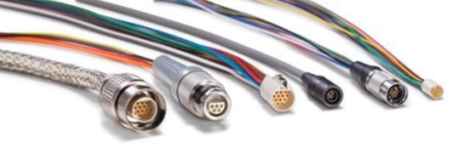
Packaging and Design Constraints
The configuration of a miniature connector is largely driven by packaging limitations and power requirements, which determine wire gauge, contact design, and housing size. Miniature connectors are available in a range of formats, including micro-D, circular, strip, and coaxial designs, and can be produced using various materials and surface finishes.
Despite the wide availability of COTS options, many applications require custom connector designs to meet strict form factor requirements. Beyond size and shape, engineers must also consider cable routing, mating forces, mechanical movement, and potential wear over time. For example, moving assemblies such as gimbals or articulated systems can introduce abrasion and fatigue risks if cable paths are not carefully designed.
Omnetics supports customers at this stage by offering both an extensive catalog of connectors and the ability to develop fully customized solutions. To help engineers visualize and evaluate connector integration early on, Omnetics provides 3D STEP models that can be incorporated into system-level CAD designs, allowing potential issues to be identified before hardware is built.
Prototype Development and Validation
Once a connector concept is defined, validating the design through prototyping is critical. Omnetics can rapidly produce prototypes using in-house 3D printing and precision machining, enabling early evaluation of form, fit, and function.
These prototypes are then subjected to development testing to assess mechanical strength, durability, compatibility, and environmental survivability. Testing may include exposure to thermal cycling, moisture, vibration, corrosion, and electromagnetic conditions. In many cases, these evaluations reveal the need for optimized materials, coatings, or adhesives to ensure long-term reliability in the intended application.
Manufacturing at Miniature Scale
Manufacturing miniature connectors presents its own set of challenges. Tight tolerances, small contact sizes, and high-density interconnects demand precise, repeatable processes. To address this, Omnetics evaluates new designs through pilot or limited production runs, allowing manufacturability issues to be identified and resolved early.
As a designer of its own contact systems, Omnetics develops and uses proprietary automated equipment for processes such as crimping, eliminating the need for manual stripping or hand tools. This approach improves consistency, quality, and performance while reducing variability in high-reliability applications.
Qualification for Demanding Environments
Custom miniature connectors often need to meet strict qualification requirements defined by medical, aerospace, defense, or other industry standards. Environmental and qualification testing ensures that connectors will perform reliably under real-world conditions and helps screen for potential quality issues before full-scale production begins.
Omnetics can perform many of these qualification tests in-house and also works closely with customers to define appropriate test profiles. When required, Omnetics collaborates with independent laboratories to provide third-party validation, ensuring confidence in both performance and compliance.
A Proven Partner for Miniature Connector Challenges
From early design support and rapid prototyping to manufacturing and qualification testing, Omnetics’ strength lies in its ability to control every stage of miniature connector development. This end-to-end approach allows design engineers to address challenges early, reduce risk, and deliver reliable interconnect solutions for even the most demanding applications.
Check our website for Omnetics interconnect solutions: